
Annual Report 2025
Key insights
As we advance our strategy, learning plays a central role in supporting young people’s wellbeing. Our strategy, Pathways to young people’s wellbeing, emphasises a systems perspective, long-term partnerships, and evidence-informed decision-making. Understanding what works, where change is emerging, and where challenges persist is therefore essential to evolving our approach.
Throughout 2025, we reflected on evidence and lessons from partners, programmes, and evaluations to better understand how change happens in the ecosystems surrounding young people. These reflections highlight patterns in what strengthens local systems — and where further effort is needed.
Three key insights from this learning process stood out during the year, and they’re shaping how we implement our strategy.
Insight 1: Youth participation reinforces systems
Youth engagement is one of our strongest cross-cutting achievements. From the Healthy City for Adolescents to the OurCity initiative and Amnesty International’s RIGHTS Click programmes, young people reported gaining confidence, voice, leadership skills, and recognition within their communities.
Yet participation does not automatically translate into influence. We saw how easily young people’s involvement can remain limited to activities, rather than shaping decisions that improve their lives. We’ve also observed continued gaps in the inclusion of underserved groups. Our experience increasingly shows that participation is most effective when it is well-resourced and embedded in formal processes.

Insight 2: Early strategic contributions enable systemic shifts
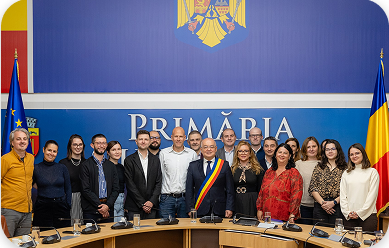
Sustained impact depends on trust, shared ownership, coalition-building, and attention to political realities. Across programmes, we observed that early, strategic contributions could unlock broader change when solutions are designed to align with institutional interests from the outset.
When we worked with the public sector – not around it – and broad coalitions of other actors, we were more likely to see policy adoption, budget commitments, and scale. In cities like Tanga in Tanzania and Koforidua in Ghana, youth participation moved from a temporary project activity to an established municipal practice – even if this progress needs further nurturing to achieve lasting impact.
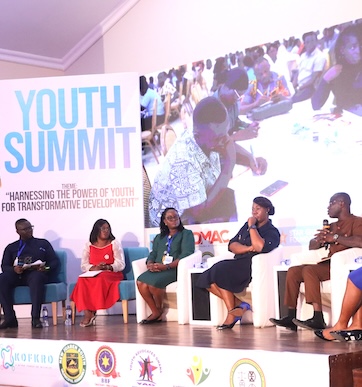
Insight 3: Local anchoring and strong intermediaries are critical
In cities and multi-partner programmes, locally rooted organisations played a central role in coordinating stakeholders, building trust, and establishing a long-term vision.
In Manta in Ecuador and Koforidua in Ghana, backbone organisations supported collaboration with municipal authorities. In Healthy Cities for Adolescents, in-country managers ensured that programmes were adapted to local realities. Our evaluations highlighted the value of these intermediaries. They also point to the risks that arise when mandates, governance arrangements, roles, or expectations are unclear. This reinforced an important insight: coordination and learning are part of the essential infrastructure of local ecosystems.
Implications
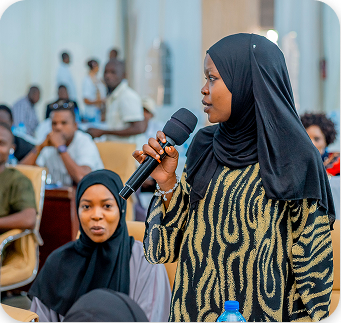
Overall, the insights we have surfaced point to a focus on strengthening local ecosystems in collaboration with in-country partners. These partners will help us establish trust-based, long-term relationships with the public and private sectors, civil society, and, importantly, with young people who live in the places we work.
Strategic Learning and Evaluation (SLE) helps us better understand what difference we make, to whom, and how we can continuously improve.
Beyond collecting data, SLE encourages us to reflect on how to elevate our work. This learning process helps sharpen our strategic focus and informs how we contribute to local ecosystems that support young people’s wellbeing and rights.